About | Vision | Mission

archit(imperf)ect LAB also known as archit(imperf)ect LAB – Life | Architecture | Belonging is an independent research platform. The name and the play on the word ‘imperfect architect’ references the foundations of Founder, Dr Anuradha Chatterjee, which is theories and writings of John Ruskin. The motif of imperfection is not just a reference to Ruskin’s theories of life and vitality, but it is also used in reference to the deliberately non-linear, itinerant trajectory of her career, and that of many other intellectuals in architecture worldwide, who simultaneously identify with practice across the domains of industry, education, art, pedagogy, research, design, and communication in architecture.
The LAB is a trans-institutional, experimental, collaborative, and non-hierarchical venture. archit(imperf)ect LAB is an emergent entity, and in due course, it will bring together research, writing, publications, exhibitions, curatorial practice, teaching and interdisciplinary collaboration. The possible research areas include architectural history and theory; John Ruskin’s architectural theories; surface, textile analogy; dress, body and architecture; feminist and decolonial historiography; architecture, ageing and care; bodies, health and wellbeing; transnational design cultures; curatorial practice and digital cultures; publications, public, and curatorship as practice.
Vision
To reimagine architecture and design as lived, embodied and social practices through which we negotiate care, difference, labour and belonging, towards more just and humane shared futures.
Mission
-
To bring histories, theories and practices of architecture and design into critical dialogue with questions of life, materiality, gender, care and belonging.
-
To make visible the often-unrecognised people, practices and forms of knowledge that shape our built environments and collective lives.
-
To cultivate interdisciplinary research, curatorial inquiry and public engagement that challenge received narratives and open up more equitable possibilities for living together.
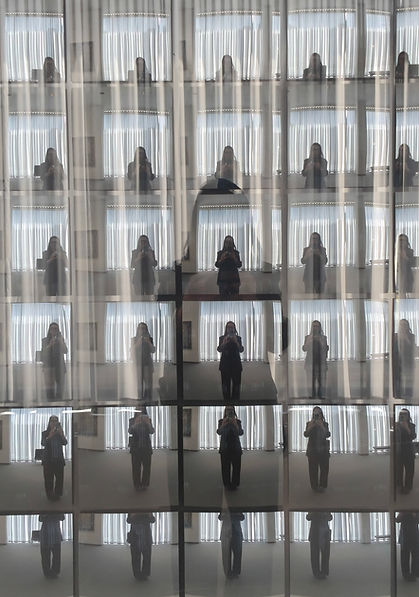
The project Everything, Now! Time, Technology, and Post Pandemic Histories of the Built Environment is positioned at the intersection of architectural history and theory, psychology and cognitive models, and histories of technology and pandemics. It argues that while the pandemic distorted the perception of time, fast and slow altogether, there is a social and subjective perception of time speeding up after the pandemic. In history, pandemics are felt, internalized, forgiven but never forgotten, as they irretrievably change our bodies and minds, wherein we learn to leverage old and new technologies and media to negotiate near and distant worlds, times, and time zones, simultaneously and continuously, engaging in essential, non-essential, repetitive socializations, intimacies, knowledge production, and engagement. The end of the pandemic was also marked by the worldwide intensification of AI discourse, grand narratives, integration urgencies and solutionism, fear and anxiety, and the emergence of the ‘generative’ – yet another production paradigm marked by speed. This came on the back of the economic recovery measures taken by every country. It is therefore argued that the history of AI cannot be written without co-writing this with that of the pandemic. The project explores this double premise and welcomes broader propositions on this significant cultural shift, which is a new concept of historical time. The questions that may be considered include, but are not limited to, the following:
-
How does architectural history and theory as a discipline retain its novelty and impact as knowledge becomes mined, generative, delocalized, flattened?
-
How does research and writing survive the slow quest for immediacy and originality ‘in the shadow’ of the perpetual presence of AI companions?
-
What happens to the interpretive labour of the historian when evidence, precedents and narratives can be retrieved, synthesized and generated almost instantaneously? How does this challenge the methodologies of history writing?
-
In what way can the learning and teaching of architectural history acknowledge, adapt, or even willfully ignore and resist this onslaught? How and why might this be resonant of previous technological ruptures in history in the first, second, and third industrial revolutions?
-
How is this important cultural shift being experienced across the transnational discontinuum, across Australia and the Asia Pacific?
-
How does this disrupt the practice of architectural history, and does it make possible other ways of theorizing historical periodization beyond the linearity of before, rupture, and aftermath, into ongoing histories of the now?
-
What happens to originality when authorship is dead, again, and history becomes data?